
Patience vs Solitaire: Are They the Same Game?
Patience vs Solitaire: Are They the Same Game?
Patience and Solitaire are the same patience game. They both describe single-player card games. In these games, you organize shuffled cards into ordered sequences. The difference is purely regional.
British and European players call it Patience. Americans and Canadians say Solitaire. Both terms cover the same games. This includes Klondike, Spider, and FreeCell. The gameplay is identical regardless of which name you use.
They’re the Same Game
Patience and Solitaire refer to identical card games. You arrange cards by suit and rank to complete the game. The rules don’t change based on the name.
When someone in London plays Patience, they follow the same steps as someone in New York. They place red cards on black cards in descending order. They build Foundation piles (the four stacks in the corner) from Ace to King. These core mechanics stay consistent worldwide.
The confusion comes from regional language preferences. It’s similar to how Americans say “elevator” while British people say “lift.” Different words describe the same thing.
New to these terms? Check out our Solitaire glossary for complete definitions.
Why Americans Say “Solitaire”
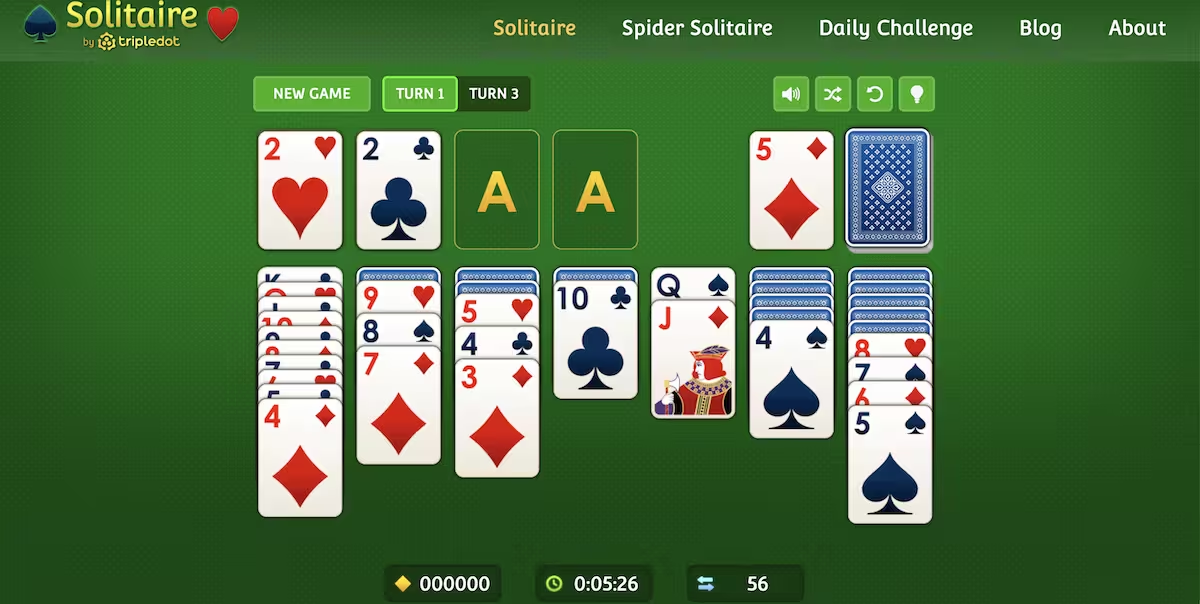
**Americans adopted “Solitaire” from the French. The word comes from solitaire, meaning alone or solitary. This makes sense because you play by yourself. ** The term became dominant in North America during the late 1800s and early 1900s. By the mid-20th century, “Solitaire” was the standard American term.
Microsoft Windows cemented this usage in 1990. The operating system included a game called “Solitaire.” Millions of people played it during work breaks. This made “Solitaire” the default term for anyone using computers.
Today, most Americans know the game only as Solitaire. Younger players may never have heard the term "patience”.
Why British and Europeans Say “Patience”
British players call it Patience because the game requires patience to complete. You need careful planning and persistence. Many games take 10-15 minutes or longer. The name emphasizes the methodical approach needed to win.
The name appeared in British card game books as early as 1870. Victorian-era players valued the game’s meditative quality. The term “Patience” reflected this thoughtful, deliberate approach.
Europeans use similar terms. Germans say Patience. Danish players call it Kabale. French players use “Réussite " (meaning "success "). The British term spread throughout the Commonwealth countries. This includes Australia, New Zealand, and South Africa.
Even today, older British card game books use “Patience” exclusively. The term remains common in the UK. However, younger players increasingly use “Solitaire” due to the rise of digital games.
The History Behind Both Names
Card games played alone date back to the late 1700s in Europe. The earliest written reference appears in a 1783 German game book.
The games likely originated in the Baltic region or Scandinavia. Players initially used them for fortune-telling. Later, they became pure entertainment. By the early 1800s, Patience games had spread across Europe.
The term “Patience” appeared in English texts around 1870. The name emphasized the game’s requirement for careful, methodical play. Players needed patience to work through difficult deals without giving up.
“Solitaire” entered American usage in the late 1800s. The French influence reflected America’s cultural connections during that period. Both names coexisted for decades. Regional preferences gradually solidified.
Digital gaming changed everything. Microsoft, an American company, chose “Solitaire” for its Windows game. This single decision influenced global terminology. Today, mobile apps and websites primarily use “Solitaire.” This makes it the dominant international term.
Want to learn more about the history of the game? Explore the complete history of Solitaire from its origins to modern day.
Start Playing Today
Now you know that Patience and Solitaire are simply different names for the same enjoyable card games. The terminology doesn’t matter when you’re building sequences. It doesn’t matter when you’re uncovering face-down cards.
Ready to play? Visit Solitaire.com for instant access to Klondike and other variants. Browse our list of must-try Solitaire games to find your next favorite. Try the Daily Challenge to test your skills. No downloads required. Completely free.
Frequently Asked Questions
What is the patience card game?
Patience is the British and European term for single-player card games. In these games, you arrange cards into sequences. The most popular patience game is Klondike. Other common versions include Spider and FreeCell. All patience games involve organizing shuffled cards according to specific rules.
Curious about variants of the game? Learn about how many different versions of Solitaire exist.
Is patience the same as solitaire?
Yes, patience and solitaire are identical. They are two names for the same genre of card games. British and European players say “patience.” American and Canadian players say “solitaire.” The games, rules, and objectives remain the same. The terminology doesn’t affect gameplay.
Why do some people call it patience instead of solitaire?
Regional language preference determines the name. “Patience” originated in Britain. The name emphasizes the game’s requirement for careful, methodical play. “Solitaire” became the American term. It derives from the French word meaning “alone.” Both names accurately describe the solo nature of these card games.